How AI Is Transforming Digital Marketing Strategies: From SEO Automation to Smarter Lead Generation
Introduction
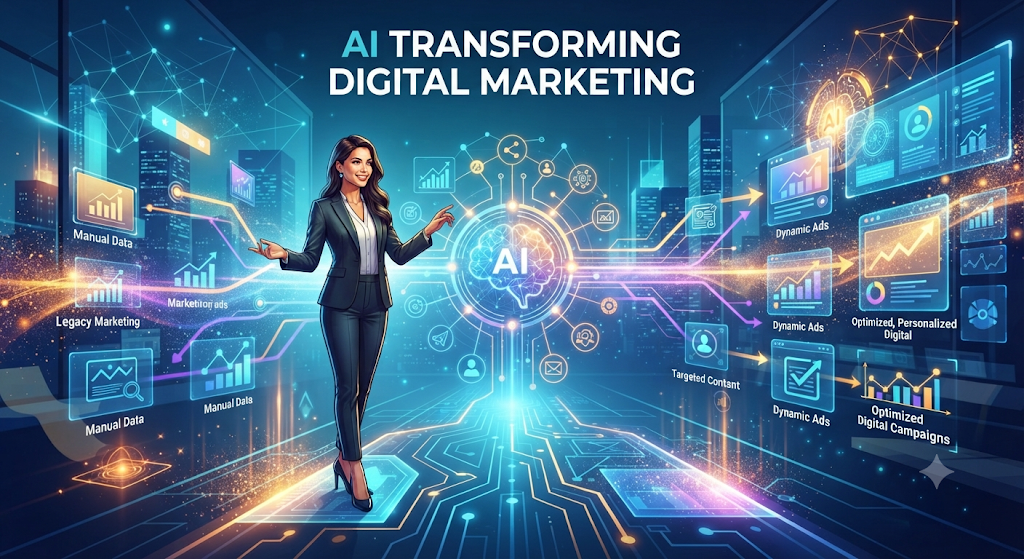
Artificial intelligence (AI) is changing how businesses plan, deliver, and measure digital marketing. It can help teams analyse customer behaviour, organise research, improve campaign workflows, and respond to enquiries more efficiently. AI does not replace marketing strategy or creativity; it gives professionals additional tools to make informed decisions and deliver relevant experiences.
From SEO and paid advertising to email and lead management, AI can support many stages of the customer journey. The best results come from combining reliable data, clear objectives, useful content, and human review rather than automating every task without direction.
1. Smarter audience research
Audience research often involves reviewing analytics, customer feedback, sales records, and campaign reports separately. AI tools can help organise these sources, identify recurring patterns, and group audiences by interests or behaviour. Marketers can use the findings to understand what potential customers need, which questions they ask before buying, and what may prevent them from taking action.
For example, an online retailer may find that visitors who read product comparisons are more likely to purchase after receiving a detailed email. A service business may discover that enquiries from a particular location convert more often. These insights can guide campaign priorities, but teams should check data quality and avoid treating patterns as proof of customer intent.
2. AI-assisted SEO and content planning
AI can speed up SEO research by helping organise keyword themes, group related queries, review search intent, and identify content gaps. It can also suggest article outlines, titles, and questions that a page should answer. These suggestions are a starting point, not a substitute for research or editorial judgement.
A strong SEO programme still depends on understanding the audience, reviewing search results, creating original information, and maintaining technically accessible pages. Editors should verify facts, add relevant experience, remove generic statements, and ensure each page has a clear purpose. Keywords should appear naturally rather than being repeated mechanically.
3. More relevant paid advertising
AI features in advertising platforms can assist with bidding, budget allocation, audience discovery, creative testing, and performance analysis. With accurate conversion tracking and sufficient data, automated systems can help identify combinations of audiences, placements, and messages that are more likely to support campaign goals.
Automation cannot compensate for poor setup. Businesses need clear conversion definitions, accurate analytics, relevant landing pages, and realistic budgets. Marketers should review search terms, lead quality, cost per qualified enquiry, and sales outcomes. A campaign that produces many inexpensive leads may still underperform if those enquiries are not relevant.
4. Personalised email and customer journeys
AI can help tailor email content using signals such as previous interactions, product interests, and engagement history. A new subscriber might receive an introductory sequence, while an existing customer could receive useful product guidance or a relevant service reminder. Teams can test message variations and timing to learn what customers find helpful.
Personalisation should remain respectful. Avoid excessive messaging or using sensitive information without an appropriate basis. Maintain accurate contact records, provide clear subscription choices, and make it easy for people to update preferences. The goal is relevance, not making customers feel monitored.
5. Faster lead handling and follow-up
AI-assisted chat tools and CRM automation can answer routine questions, capture enquiry details, route requests, and remind sales staff when a follow-up is due. Lead scoring may help prioritise enquiries based on relevant actions, such as requesting a consultation or submitting a detailed project brief.
Define which questions automation can answer and when a person must take over. Complex requirements, complaints, pricing exceptions, and sensitive matters should reach an employee. Review chatbot responses and lead scores regularly to identify errors or missed enquiries.
6. Measure business outcomes
AI-supported analytics can highlight changes in traffic, engagement, conversions, and campaign costs. Reports should connect activity to business outcomes. Useful measures may include qualified leads, booked consultations, revenue, customer acquisition cost, repeat purchases, and time taken to convert an enquiry.
Use consistent tracking and compare meaningful periods. Changes to attribution, website forms, or campaign settings can make comparisons misleading. Automated summaries can save time, but teams should inspect the underlying data before changing budgets.
7. Introduce AI with a clear process
Start with one business problem instead of adopting several tools at once. A company might use AI to group keyword research, summarise campaign feedback, or classify incoming enquiries. Define the expected improvement, establish a baseline, and test the workflow. Check accuracy, privacy, brand tone, and usefulness before expanding it.
Document who reviews AI-generated material, what information may be entered into each tool, and how mistakes are corrected. Keep human approval for public-facing content, important customer communications, and significant spending decisions.
Conclusion
AI is making research, optimisation, personalisation, and campaign analysis more efficient. Its value depends on the strategy behind it. Businesses that combine AI-assisted workflows with original content, accurate measurement, thoughtful creative work, and human oversight can build more relevant customer experiences and improve decisions over time.
Businesses looking to strengthen their online presence through coordinated digital marketing, SEO, and paid campaigns can explore DigiKliQ Infotech for information about relevant services.
DigiKliQ Infotech supports a practical approach in which technology serves clear business goals, transparent measurement, and meaningful customer communication. For additional context on evolving customer behaviour and digital channels, read Next-Gen Marketing: An era of GenZ. The existing article discusses personalisation, digital platforms, and customer engagement.